
The UK Sales Calendar: When Retailers Actually Discount (and When They Don’t)
21 June 2026 · 2 min read
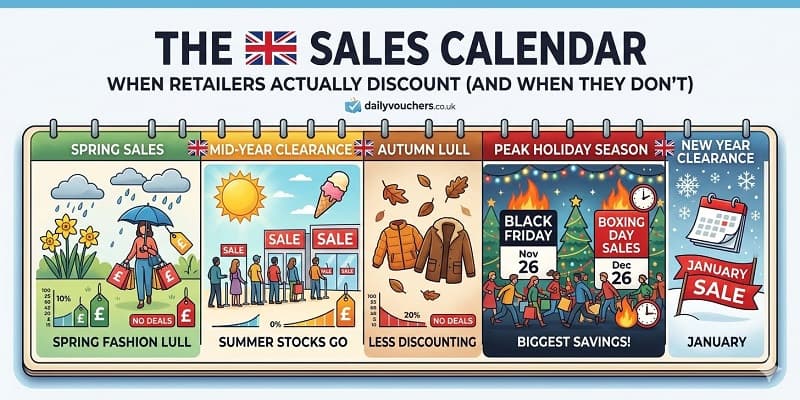
Retailers run "sales" more or less constantly now, which makes the word almost meaningless. Some months genuinely bring lower prices. Others are just relabelled full price with a red banner on top. Here's how to tell the difference.
January isn't just about January sales
Post-Christmas January clearance is real, particularly for homeware, furniture and anything seasonal that didn't sell through in December. Clothing is more hit-or-miss — you're often seeing end-of-winter stock rather than genuinely deep cuts, with the best of it already picked over by Boxing Day shoppers.
The mid-year lull
Spring and early summer are the quietest months for genuine discounting. Retailers are selling new-season stock at full price, and there isn't a major shopping event to build a sale around. If you can, this is the time to avoid big non-essential purchases rather than the time to make them. June sometimes brings early summer clearance, but treat it as a bonus, not something to plan around.
Autumn: the real build-up
September through November is when most retailers quietly start running "early access" and pre-Black Friday offers, testing demand and clearing stock ahead of the big event. These are often better value than the Black Friday deals themselves, because there's less pressure and less inflated "was" pricing to wade through.
Black Friday and Cyber Monday, minus the hype
The discounts are real, but not universally the best of the year — some categories (large electronals especially) do genuinely bottom out here. Others, like fashion, are often matched or beaten during quieter clearance periods later. The single most useful habit for Black Friday: track a handful of prices for a few weeks beforehand, so you actually know whether a "was £199, now £149" is a real cut or a number that was quietly raised the week before.
Boxing Day, honestly assessed
Boxing Day sales are largely stock clearance — genuinely discounted, but you're choosing from what's left rather than what you actually wanted. Good for homeware, decor and anything you're not fussy about the exact style of. Less good if you had a specific item in mind.
A simple rule for big purchases
If it's a big-ticket item you can plan for — a mattress, a laptop, furniture — the safest approach is patience over prediction: set a sinking fund for it, watch the price over a few weeks, and buy when you see a genuine drop rather than when a calendar date tells you to.